
Is it time to trade in my petrol car?
Interest in electric vehicles is soaring. With petrol prices hitting record highs, EV sales are also hitting record highs. In March, EV sales doubled, making up 14.6% of the market. If you haven’t traded in the old petrol car, it’s starting to look very attractive. I asked some local EV owners what you need to know before you make the move.
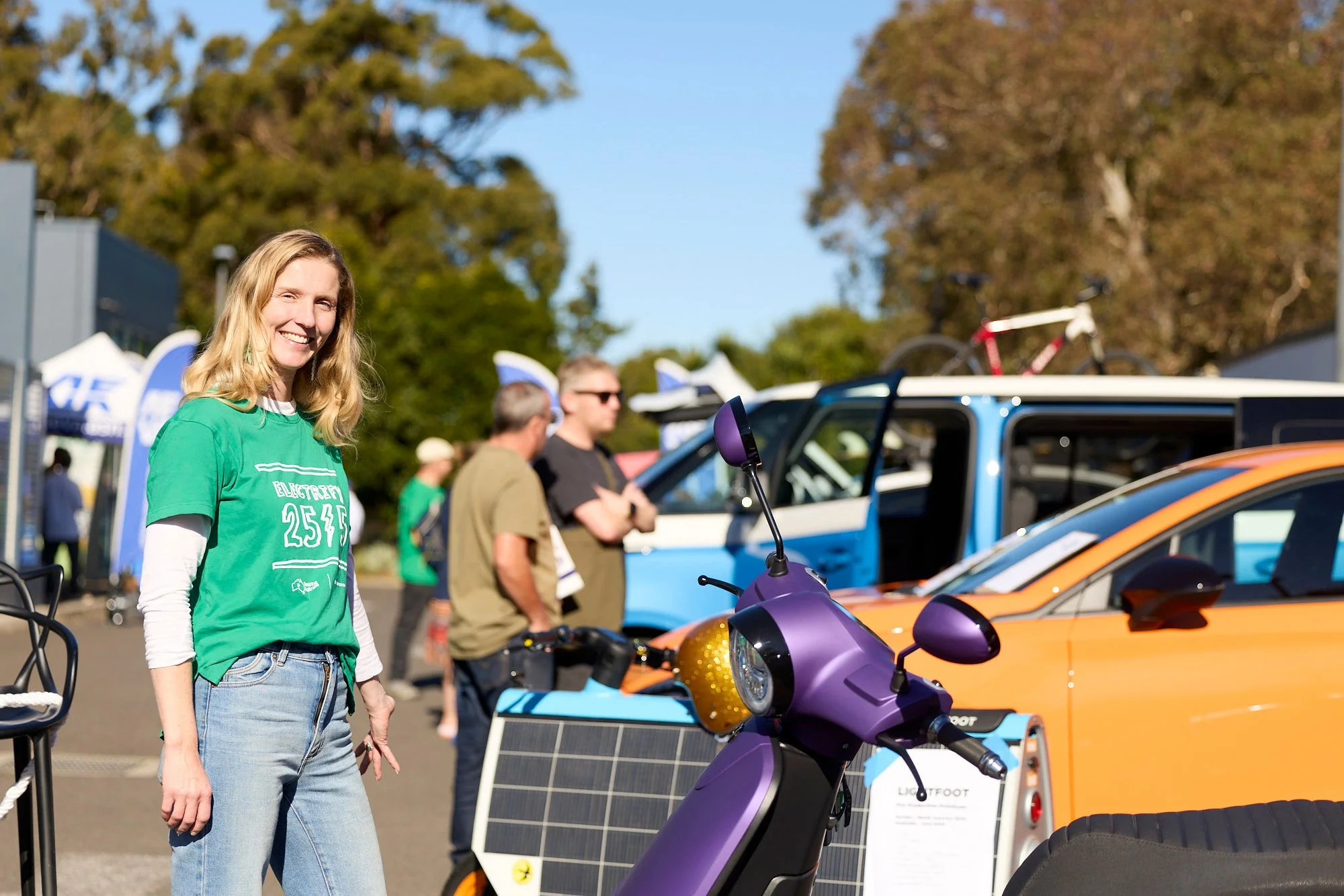
Checking out the EVs at Go Electric Open Day, Thirroul, 2025.
How much can I save by trading my petrol car for an EV?
Assuming that you spend an extra $10,000 on an EV than you would if your next car was petrol, the average Aussie family car will save around $34,000 over 15 years charging their car at home with solar - or $17,000 without solar. It’s not just savings on fuel - the maintenance costs also drop. No oil changes, no radiators, no fan belts - expect to also save a lot on servicing costs over the life of the car. Check out the Rewiring Australia EV savings culculator to work out how much you could save based on your preferred car size and usage.
What if I can’t afford a new car?
Second-hand EVs are growing in availability as more new EVs hit the road and come off leases.
Another option is to investigate novated leasing through salary packaging. This lets you access the fringe benefits tax (FBT) exemption, which can cut the effective cost of an EV significantly.
Or consider an e-bike. Some people get an electric cargo bike as a ‘second car’.
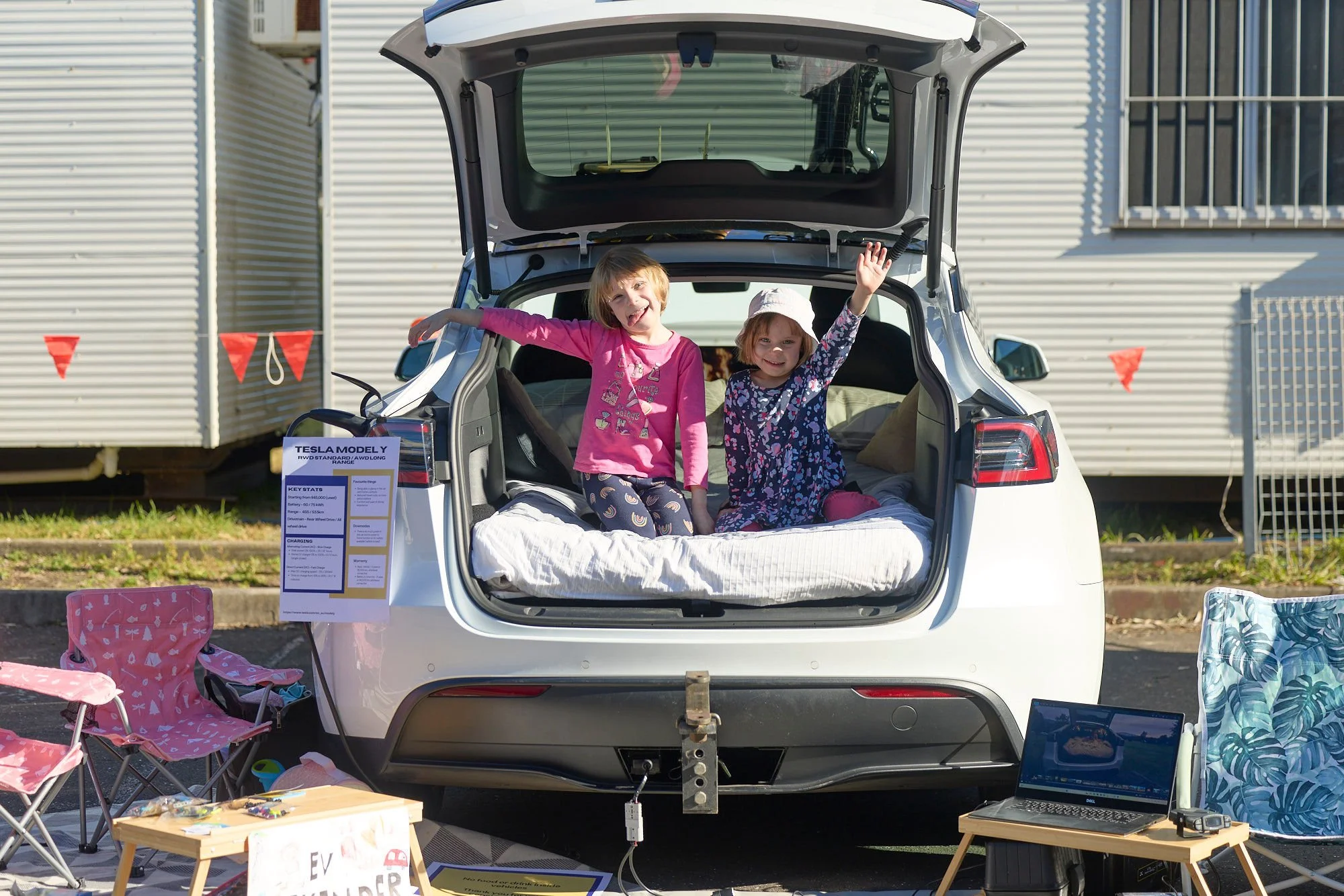
So roomy you can sleep in it - Kids demonstrate the Tesla Model Y at Go Electric Open Day in Thirroul, 2025.
How far can an EV go on a single charge?
Most 2026 EVs comfortably exceed 400km on a charge. The new Tesla Model 3 RWD can do 750km - a sign of things to come.
One interesting thing about EVs is they use less energy in city traffic than doing high speeds on the freeway - the opposite of what we’re used to in petrol cars. When you’re stopping and starting all the time, EVs automatically recharge the battery using your braking energy. But on the highway at 110km/h, wind resistance means range drops by 15–25% compared to city driving.
Does an EV work for long regional drives?
It’s all about planning. The "National Charging Network" now reaches most major regional hubs, and it's expanding fast. EV charging is pretty good in 2026 - and it will only get better from here. Plan a 25-30 minute charge into your normal rest stops on long trips and you're set for another 2 hours on the freeway. This family travelled all around Australia in an EV pulling a caravan!
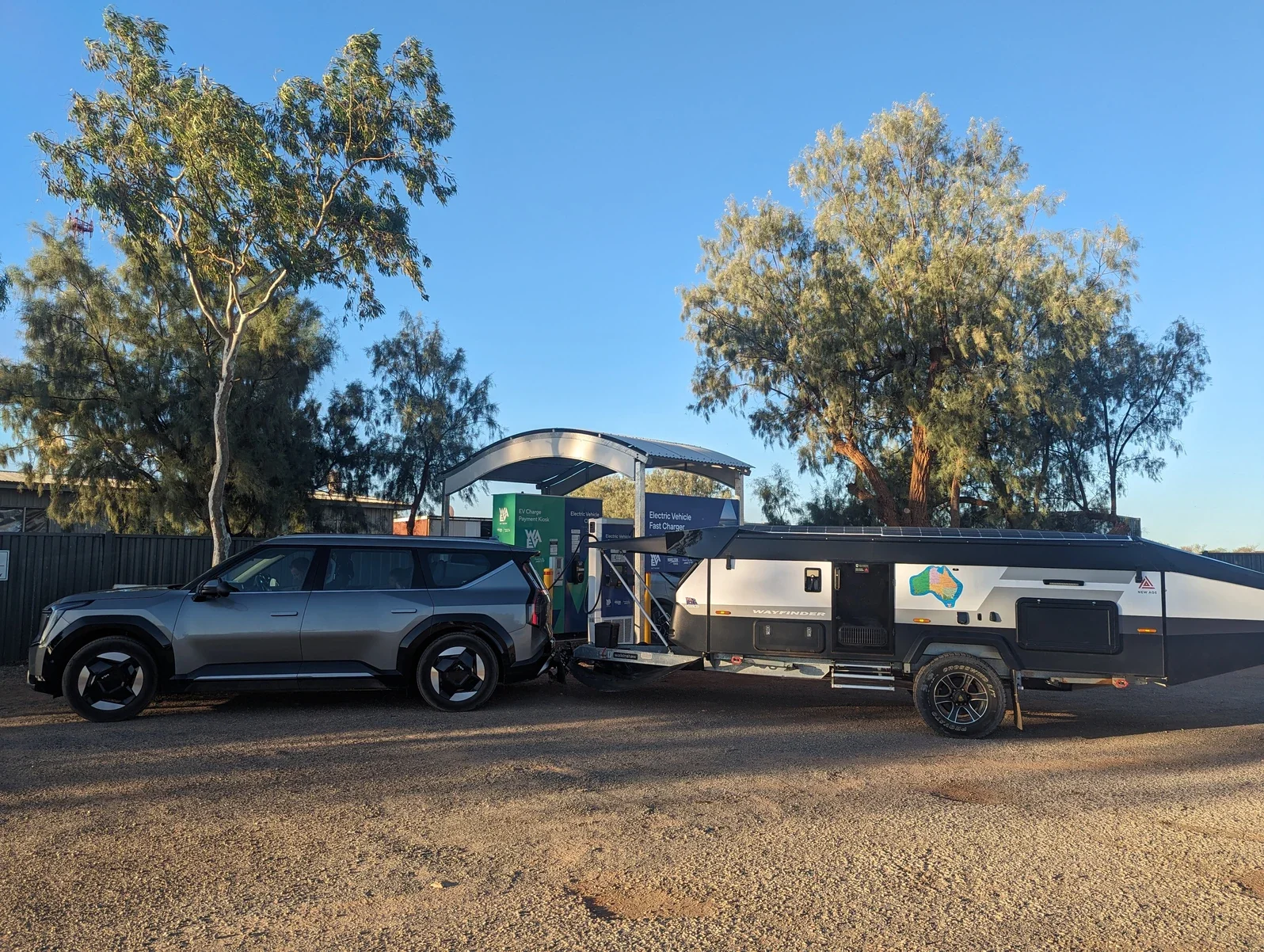
Charging at the Overlander Roadhouse, WA. Photo credit: https://www.electrekking.net/
Are there electric utes or cars with towing capacity?
I’ve met a Tesla Y family that regularly tows their caravan down the south coast, and BYD Atto 3 dad that tows a fully stocked camper trailer. Just know that towing reduces the range, so you need to plan your trip accordingly.
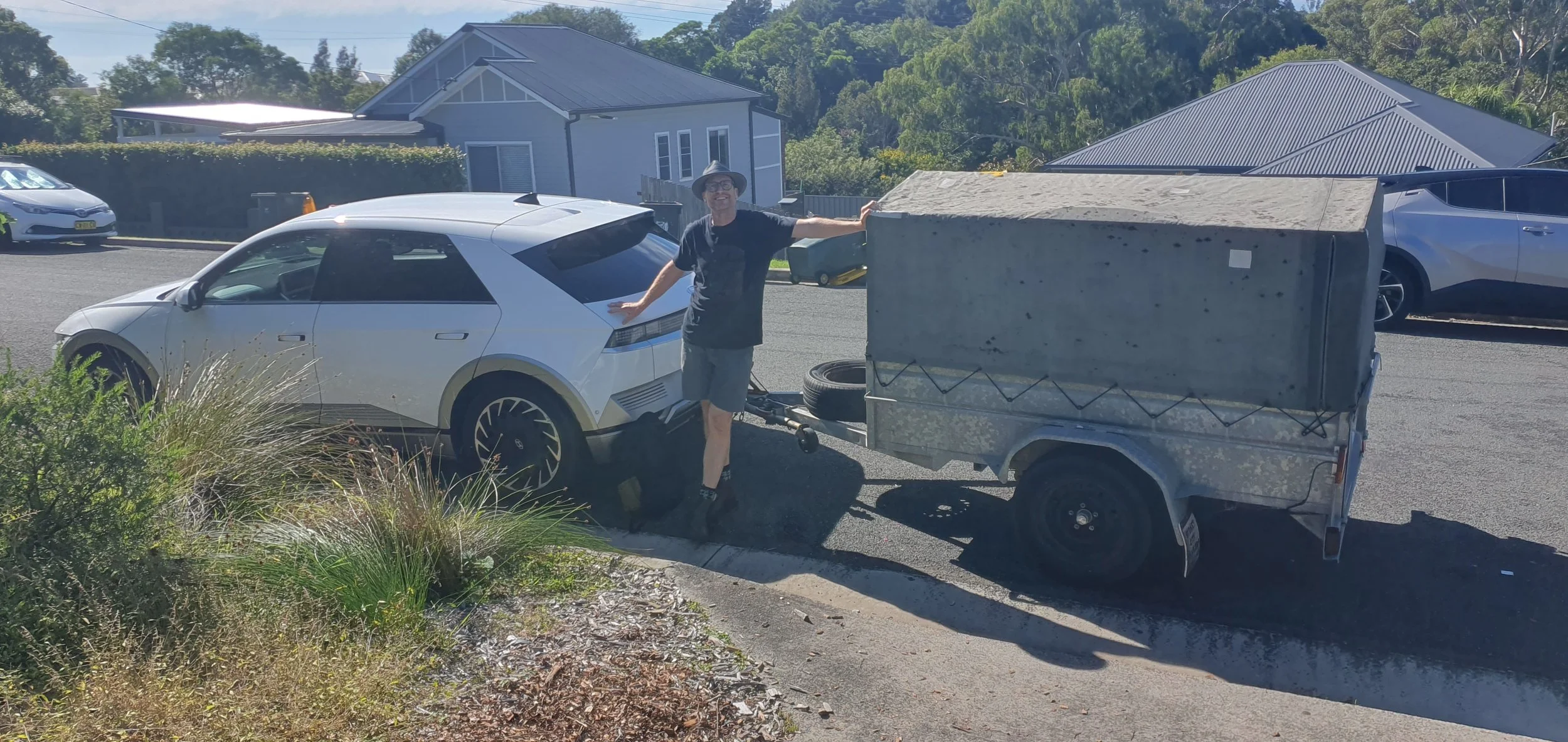
Lucas from Bulli with his Hyundai Ioniq 5 and trailer.
Meanwhile, the electric ute market is arriving. The KGM Musso EV (around $60k) offers 380–420km range and 1,800kg towing. Models from Geely, LDV, Isuzu, and Kia are on the way. Plug-in hybrid utes like the BYD Shark 6 bridge the gap if you need petrol-matching tow capacity right now.
Can an EV do everything I want it to?
We expect our cars to do everything - from the daily commute to the annual camping trip towing a caravan, 4 bikes, 3 surfboards, and 2 fishing rods. But most Australian households also own two cars. If you are worried about an EV not delivering all the things you need, consider replacing one car - your around towner - with an EV. That will give you a lower upfront cost, lets you dip your toe in the water, and also gives you some immediate savings on petrol.
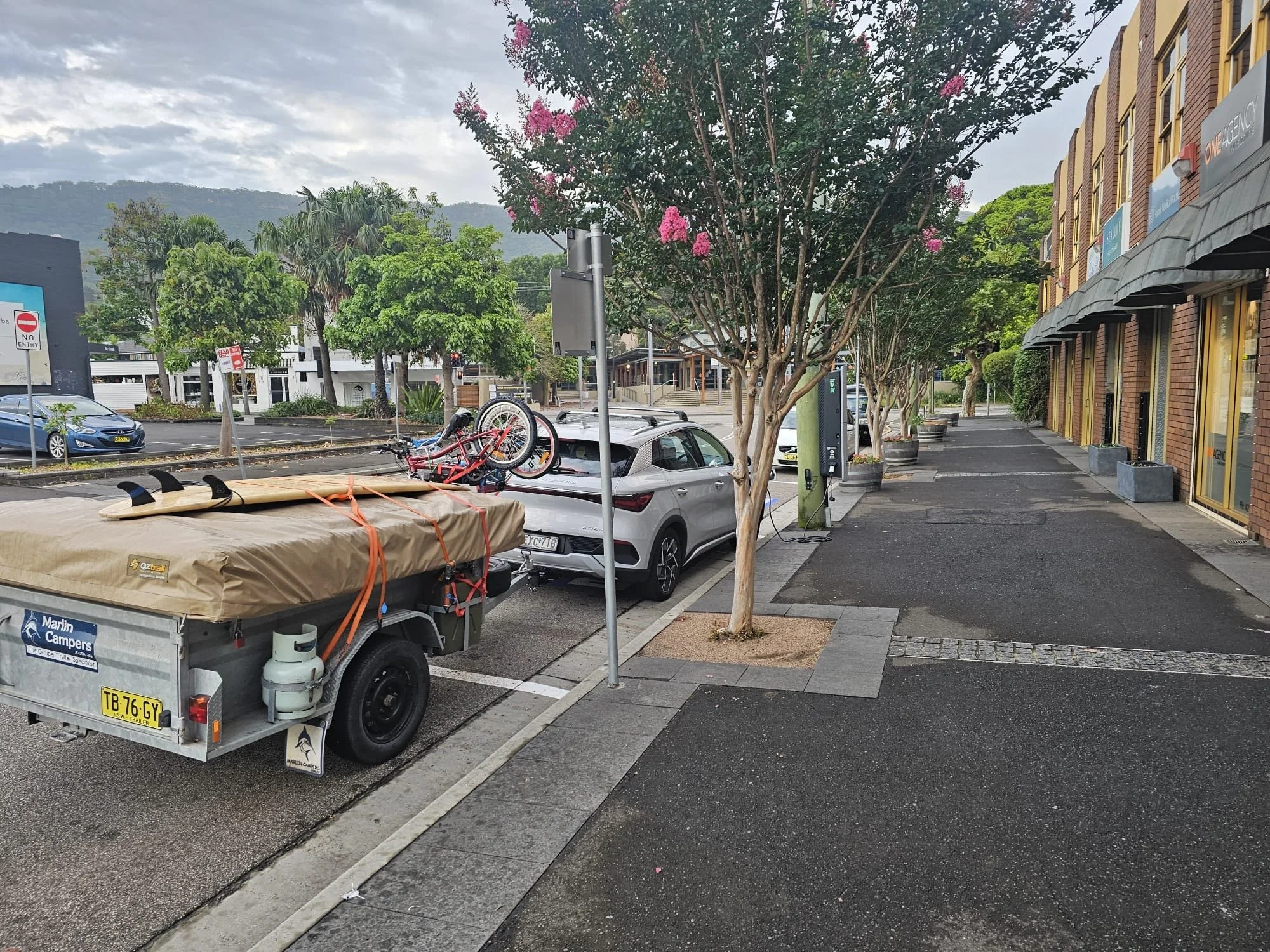
Charging in Thirroul before a big camping trip.
For the full EV guide and EV cost calculator, visit our EV FAQ.
